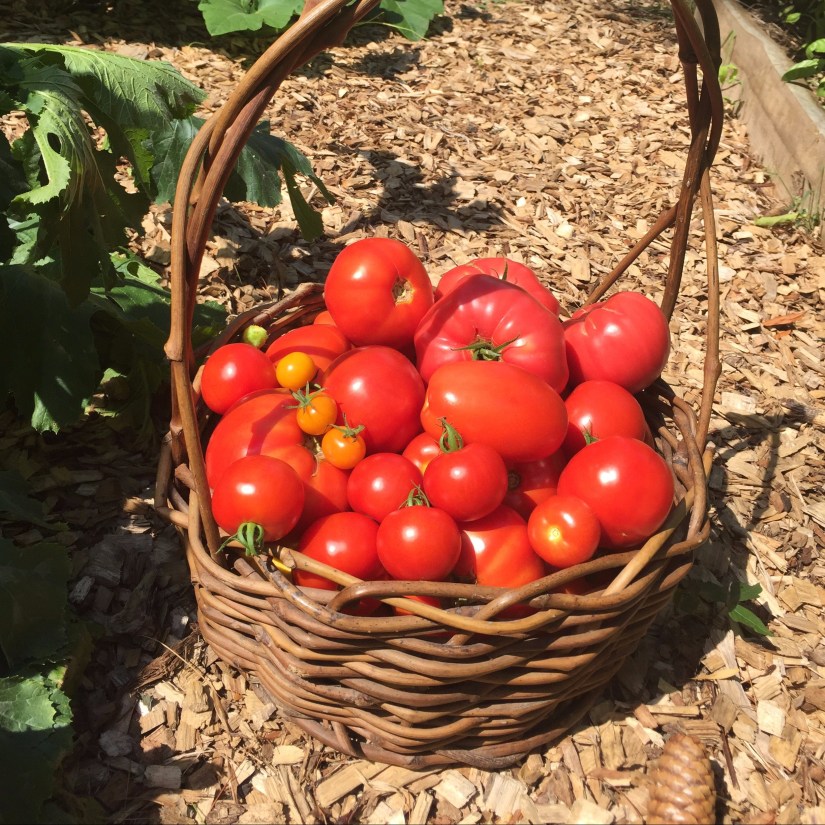
About six months ago after our first family adventure in our camper and gaining a new appreciation for living in a simpler way, I wished for a slower pace to life. Fast forward a couple months and I got it! Never could I have imagined that it would be forced upon us! And never would I have wished for a global pandemic to bring this slower pace. But, with a slower pace and more time on our hands we were able to pursue another wish of mine, a big garden with lots and lots of tomatoes! Thankfully to a very hearty compost delivered by our local dairy farm and to the hard working hands of my husband, kids and myself, the tomato dream has come to us in bucket loads!
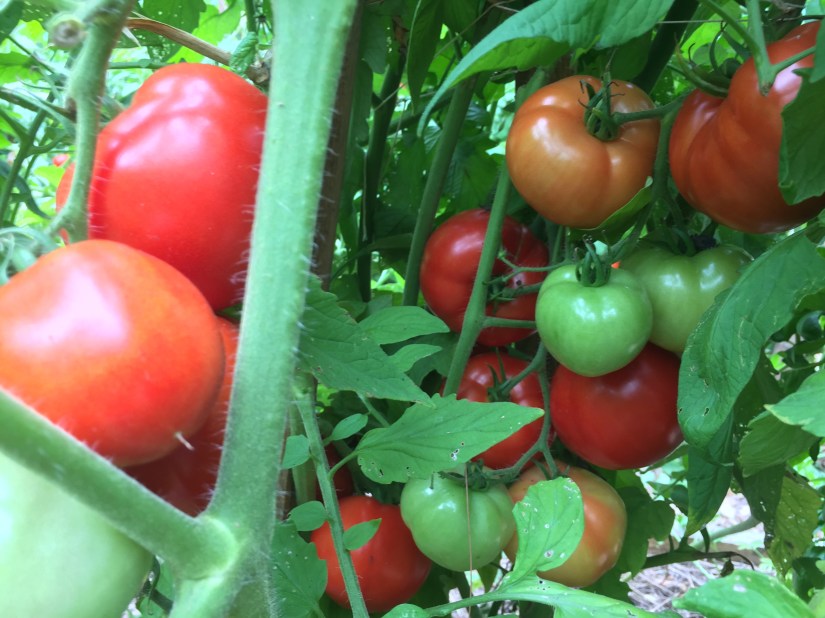
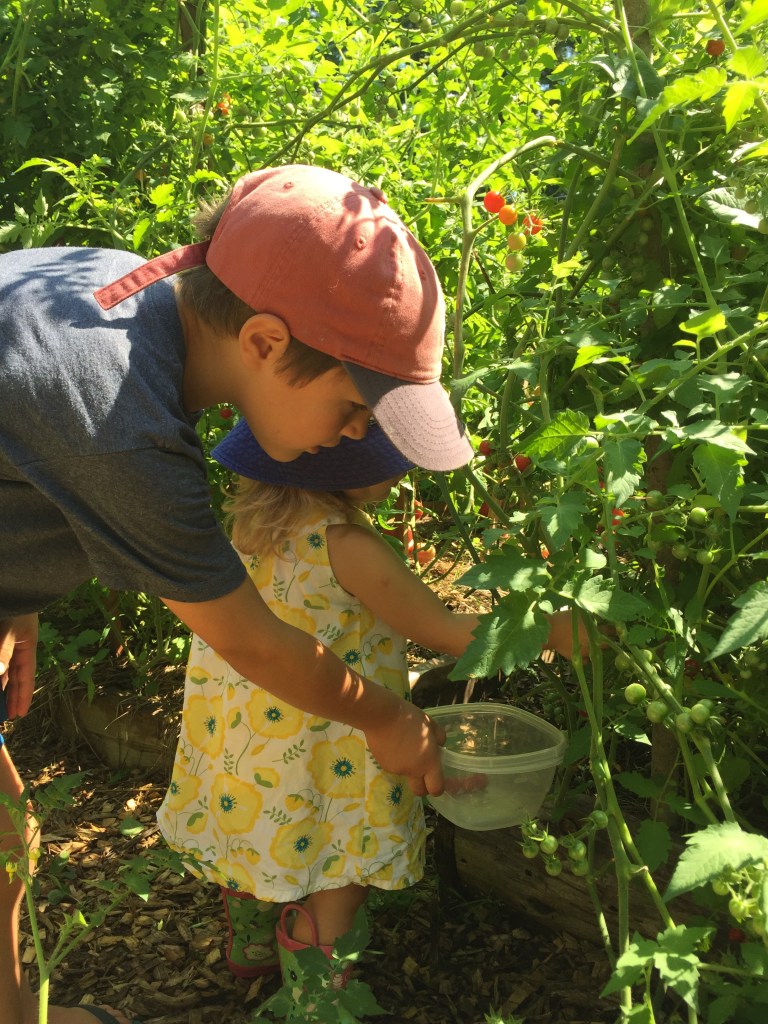
We planted numerous varieties of tomatoes this year; Brandywine heirlooms, Early girls, Sun Gold cherries, Fourth of July, Big Boy Brandywines, Plum tomatoes and lots of cherry tomatoes. Little did we know how prolific the plants would be and how good a growing season we would have. The kids and I are out there every day inspecting the tomatoes and gambling on which ones are ok to leave for tomorrow hoping the slugs and other small hungry visitors won’t eat them before we get to them. It’s a risk we’re not always willing to take, but Our tomato storage capabilities are reaching their max. I feel more and more like my Italian Nonna everyday as I care for my tomatoes with the tenderness I do my children and trays fill my house with upside down tomatoes spaced apart and covered with linens in order to prolong their lifespan. Like us, the tomatoes are also better off social distancing to insure their health and longevity.
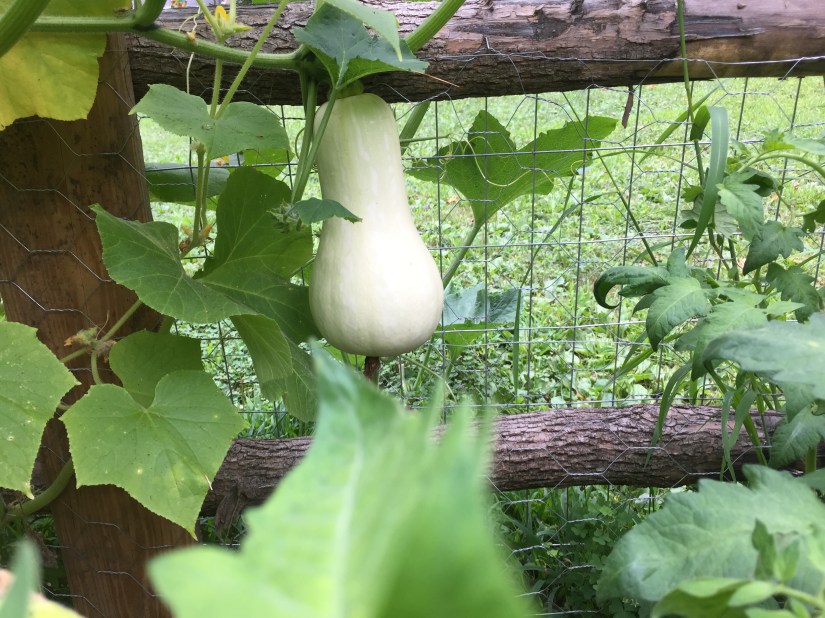
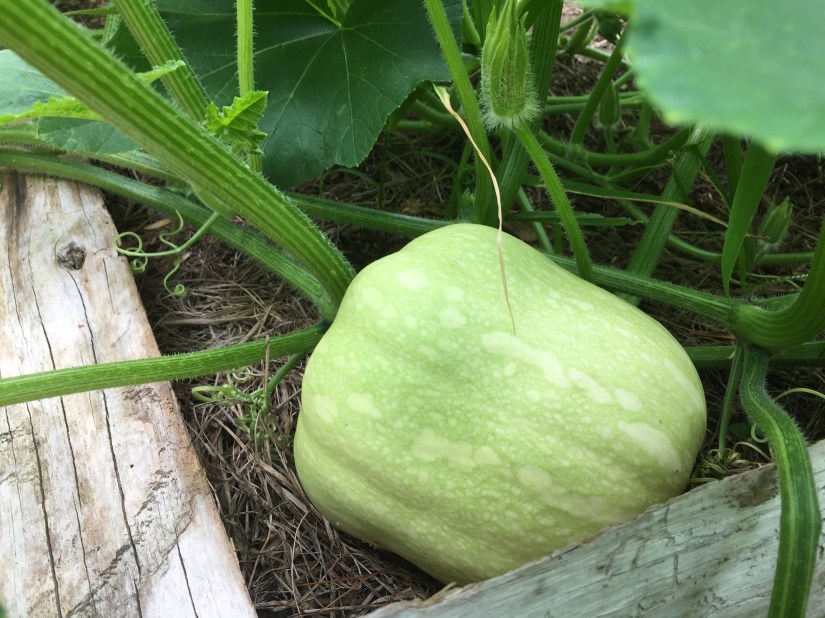
I Have been making sauce, canning, jarring, freezing, sun drying and roasting tomatoes daily. We’re eating many tomato sandwiches with fresh pesto and mayo. There is nothing quite like the amazing taste of a vine ripened tomato. It’s a simple thing that can bring so much joy. The tomatoes seem never ending and the garden is beginning to feel a bit like Big Anthony’s garden from the Strega Nonna storybook! For those not familiar, his garden is a bit out of control, but the unwieldy magic of a garden continues to be truly delightful and exciting! We keep finding new surprise plants that have sprung from our dirt and are now bearing fruit. We have butternut squash trellising across our fence, an unknown squash growing in the pumpkin patch and compost bin, cucumbers growing in our pot of Canna’s and a giant gourd plant taking over a flower bed!
Butternut squash seeded itself into the garden
Another squash surprise that is an unknown!
Every meal seems to be a new creative adventure. We have roasted some of Leo’s giant pumpkins and made lasagna size pumpkin pies! With plenty pumpkin purée leftover to fill our freezer for later use. We can’t get enough squash fritters, zucchini bread, fresh garden salsa and cucumber salads! We’ve even gotten pretty creative with our pesto recipes and made beet green, kale and basil pesto with almonds and walnuts. We’ve gone Greek and made home made Tzatziki along with feta, tomato, cucumber wraps. The magic of the garden keeps on giving and continues to renew and recharge our mind, body and soul!
Some Arugula seedlings springing up in the garden
We have harvested all the carrots, beets and lettuce and have started new plantings for an early fall harvest. There are so many great vegetables you can plant in August for most planting zones that will allow for a crop before winter. We have put in bush bean plants, arugula, spinach, mesclun salad mix, kale and broccoli rabe (a bitter green similar to broccoli). Some other vegetables that you can plant now are radishes, carrots, beets (for beet greens and small beets), Swiss chard, and garlic.
The kids are drying out seeds from the tomatoes, green beans, cucumbers, banana peppers and pumpkins to save for next year.
To Plant a Garden is to Believe in tomorrow.
Audrey Hepburn
There is something so therapeutic about working the earth, growing your own food and cooking and eating together. It is a tradition I hold dear to my heart that I am grateful to pass down to my children. Sunday dinners at my Nonna’s house packed into her tiny kitchen with my Aunts, Uncles, Great Aunts and Great Uncles, cousins and friends eating a home cooked meal from the garden while listening to them debate over who found the cheapest grapes and broccoli rabe – are some of my dearest childhood memories. As a young girl I didn’t quite understand why my grandparents worked so hard when you could buy everything at the food store? Yet, there was something special about what they did that struck me even at an early age. Both my grandparents have since passed, but I feel their presence shining over me each time I set foot in my garden and get lost in the rows of tomato plants. They were two very hardworking people who lived very simple and always shared the fruits of their labor with those they loved. They were the original ‘Farm to Table’ farmers. The way they have shaped my life to appreciate the simple things, to know where my food comes from and to respect the earth that feeds me, is profound. They have gifted me with the secrets to the true riches in life, good food, family and friends- and for that I am ever grateful.
If I am so lucky to be granted a third wish, It would be that – All who have tasted the pleasures of the earth work together to preserve it. Be that in the garden and in life.
This year, My 11-year-old daughter Ava, was part of a wonderful book club that explored so many fantastic novels about life’s hardships and resilience. The last book of her book club series was, Same Sun Here, an inspiring novel that explores resilience, resistance, having a voice, shared humanity and the joys of friendship. An Indian girl who has emigrated to New York City and a coal miner’s son from Kentucky find they are kindred spirits through their friendship as pen pals. Both are facing hard times, fathers working away from home, a close bond with their grandmothers, and an interest in social action. Through the kids correspondence with each other, the story captures how two people that live far apart are fundamentally the same despite racial and cultural differences. Their friendship inspires each of them to have courage and make their voices heard.
So many art projects and different topics sprung from Ava’s reading this novel. Which are great examples of where you can go with homeschooling and reading a book.
Creating Change. Empowering Kids. Ava was very inspired after reading this novel about taking action to create the change she would like to see in this world. We had a lot of conversations about the environment and climate change and what actions she can take to create change right now.
Deforestation. In the book, the character is dealing with the effects of deforestation in his community and with courage learns how to make his voice heard. We further researched deforestation in our country and in the Amazon and Africa. We looked at both sides of the story as to why land is being cleared and an argument for both sides. We also looked at how these actions relate to climate change and what other actions could be taken to meet the needs of those clearing the land and those concerned about the harmful effects to the environment.
Write Poetry. Ava has always been interested in poetry, but after reading this book, I saw her interest in free writing poetry spark a little more. A favorite place to write is out in nature, taking in the beauty of her surroundings and penning them on paper.
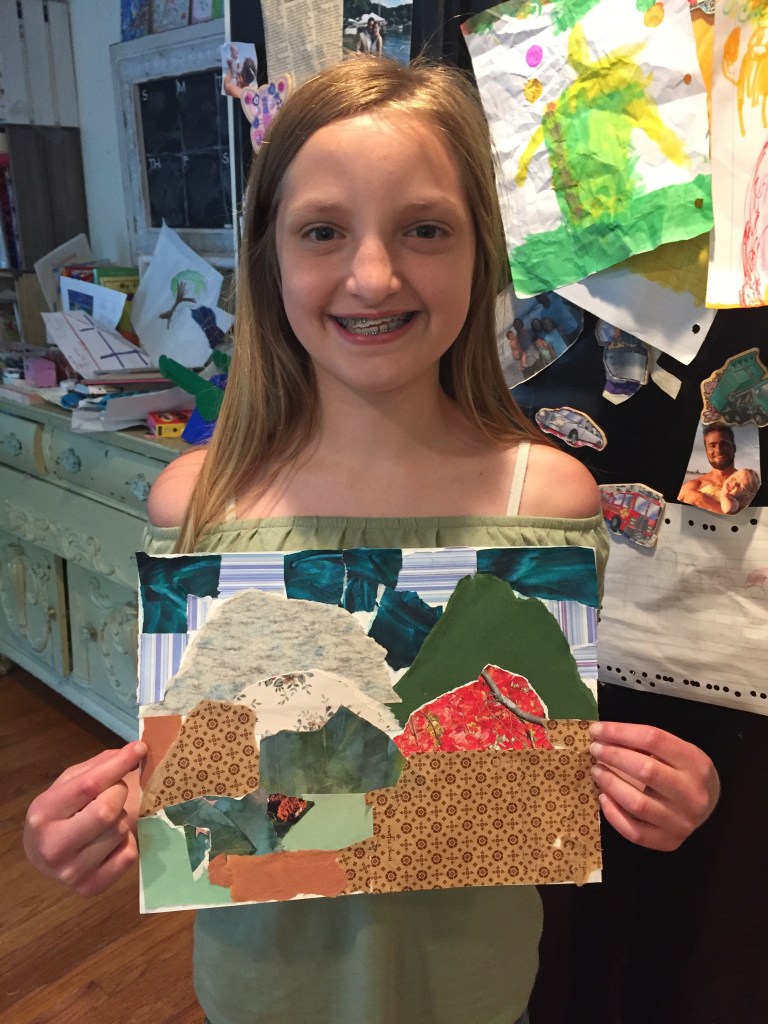
Nature Art. Ava’s book club continued to meet throughout the year on zoom. The kids always have some lively discussions and do some creative crafts. For this book, the kids made mountain collages out of scraps of colorful paper inspired by the book’s message about the mountains and deforestation.
Pen pals. Another wonderful activity from book club inspired by the novel was to pen pal with each other. Ava has had two very close pen pals that she has been corresponding with since she learned to read and write. They are friendships that she cherishes. She is so excited to have some more pen pals that are close girl friends from her book club! There is something very classic and precious about writing a letter and sending it in the mail. It is an art that hopefully won’t disappear completely with modern technology. All of my children have pen pals and they also write letters back and forth with their grandparents. During this time of social distancing, letter writing with pen pals is a great way to continue socializing with those you love, to practice spelling and grammar with your children and to brighten someones day who might be feeling alone.
*You could also contact nursing homes in your community or across the states to see if there are seniors who would like to letter write with your children. Since those in nursing facilities are so closed off from family and friends, it is a great way to be a friend, to spread some love and to maybe make a new friend of your own!
Wether you are a seasoned homeschool family looking for some new resources and ideas, or are new to homeschooling because of a pandemic and decisions to keep your kids home this coming fall – Below you’ll find some Basic Homeschool Ideas, Advice and Resources that I hope will inspire you in your upcoming school year.
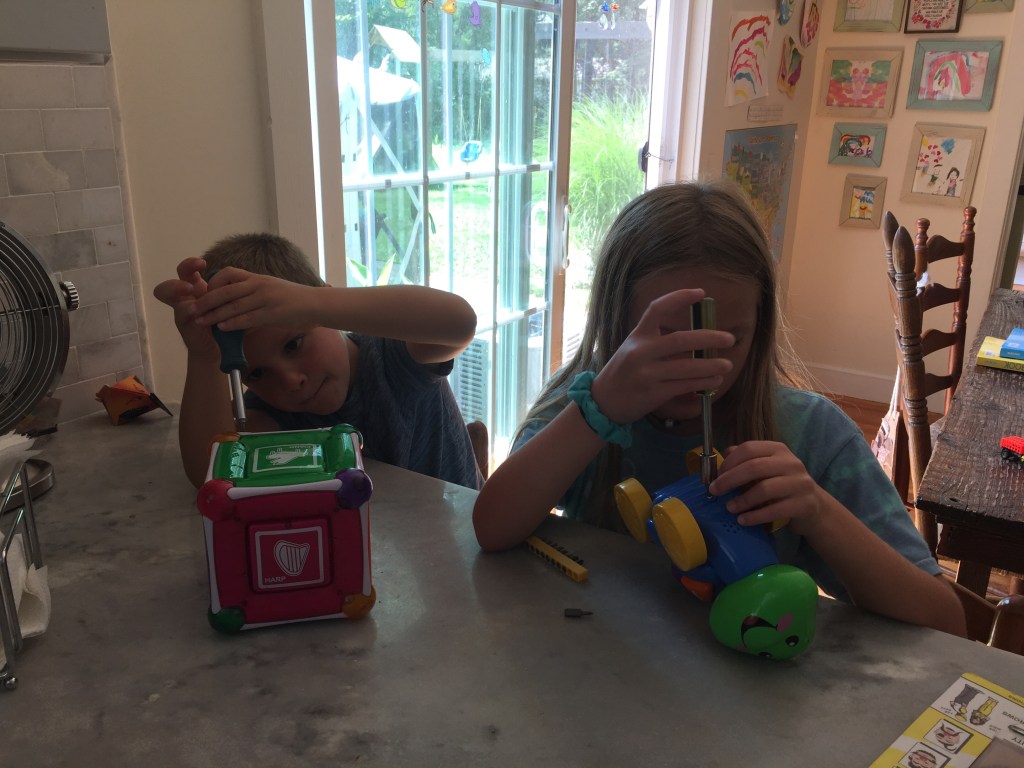
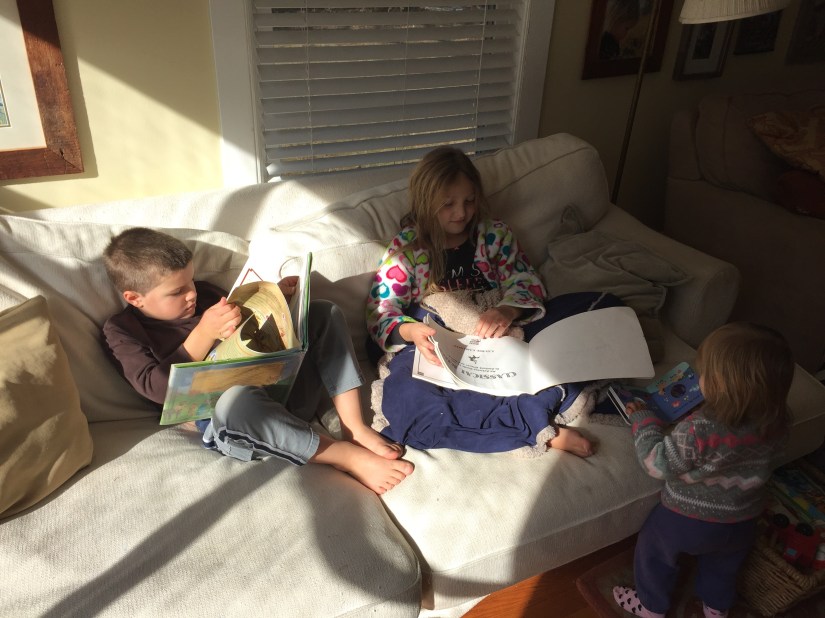
I have four children and no background in teaching. My oldest daughter is 11 going into 6th grade, my second daughter is 8, going into 4th grade, my son is 6 and going into first grade and my youngest daughter is one and a half going on twenty! I have been homeschooling them all from the start, but revisit it with them and myself each school year. For each of us, homeschooling is a journey and an adventure. It is at times Wonderful and exciting along with being overwhelming and crazy! There are days that are easy and times of complete struggle. I have learned that being creative and having confidence in the natural learning process is more rewarding than trying to check lessons off my list as a way of determining if they have been accomplished. Children each learn in different ways and no matter what we do or how we do it, they are always learning. I don’t have a strict routine and I don’t completely unschool. I find we all need some sort of a routine to function, so we usually spend most mornings after breakfast and before lunch with our studies in some shape or form. It can be book work or group learning projects, independent reading and writing or independent lessons. We always incorporate outdoor time, free time and usually some one-on-one time throughout the week. The kids all practice math in their workbooks at least three times a week along with spelling and writing. Science, History, Art and more are usually organically weaved throughout our week in a natural learning process. Most books we’re reading or topics of interest take us naturally into studying different subjects. Learning takes place throughout the week and even on weekends because naturally, we’re always learning and everything you do counts!
The Short List of Advice:
Integrated Learning: Teach topics to all your children together and create assignments for each of their abilities
Purchase either a Curriculum or some workbooks to supplement your child’s learning. This will allow for you to have some days where the kids can just have the work ready for them when you need it.
Instill a love of Reading. Turn every book into a learning experience and activity beyond the actual book. This will instill in your child an independent love of learning and seeking out information for life.
Create a Routine that works for you and your family. Learning and schooling doesn’t have to take place at a certain time of day in a certain room of your house. Some children are more alert and eager to learn later in the day, while you may find some are better learners in the morning. Sometimes it’s easier to set times to work during the day, but you also might find that working with your children and how they learn will create a better work flow for you all.
Follow your Child’s Interests. If your child is interested in oceanography, use that as a main topic that you branch off with other lessons. Incorporate math based on the sea, sea creatures, amount of rainfall. You can definitely google search for ocean math ideas geared toward a certain age or make up your own. You can do an art project of the ocean, it’s seabed, it’s creatures… you can incorporate science, history and geography all with this one topic or any topic that interests your child. This type of method helps engage your child in subjects they want to learn more about and teaching them how certain subjects are necessary to learn and applicable.
Get Outdoors, do things you love together, play games, cook, bake, learn something new, go on field trips, have time together with friends and family, join a co-op, take classes – look at all experiences in life as learning and you’ll find homeschooling is just a way of life. *All these social pieces may not be suitable for the upcoming school year because of the pandemic, but be creative and you’ll find you can still explore new interests and socialize!
My best advice is to keep things simple and follow your child’s natural interests and create learning experiences from them. There are so many fantastic resources out there and lists and lists of what children should be learning that it can be quite overwhelming. When I work on the kids education plans for the school year to send to the Superintendent of our schools, I get so excited about all the things we can cover, but I also feel a bit of anxiety over how I can possibly cover all that material with each child that is expected of me. Integrated learning is what works best in our house and I find its helps us cover more material and subjects than we could have imagined. There are so many topics you can read about and teach to each of your children’s learning levels through art, science, history and math. I have found that this approach makes homeschooling and learning so much more enjoyable for us all.
An example of this idea is a topic we covered this year with Simple Machines. We got a couple books on Simple Machines and read them together – My six, eight and eleven year olds. We then researched the history of simple machines, which allowed us to explore other countries and history. Then we re-created our own simple machines – a catapult and a pulley. We watched some great video clips about Rube Goldberg machines and then I had the kids create their own designs. With some of our designs and experiments we used the Scientific Method – My older two children were able to work on this independently and record their own data, while I worked on my 6 year old’s hypothesis and findings with him in his journal. The kids worked on their own machines and presented them to each other and the girls wrote creative stories about their work. One topic, three different grade levels and for each student we were able to explore, science, math, reading, writing, art and history!
Materials, Curriculums and Resources:
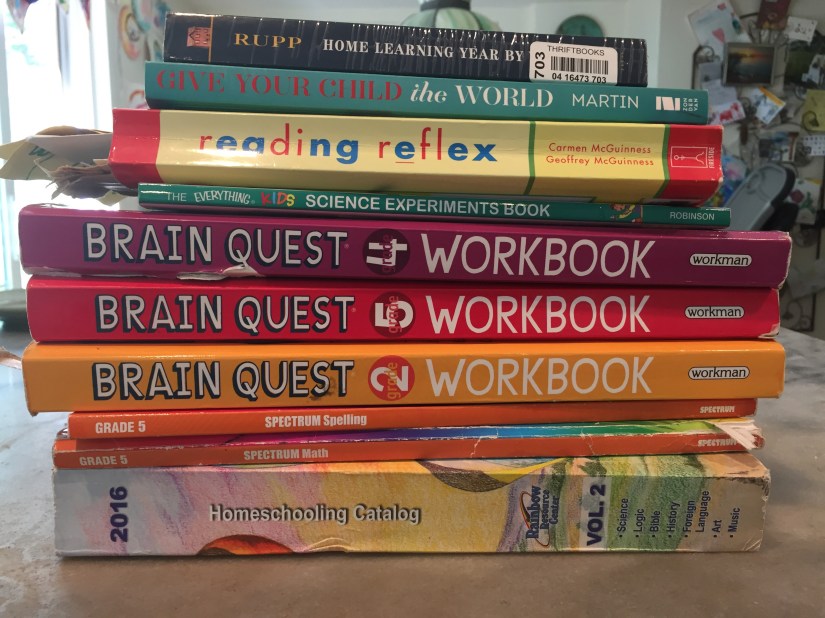
My favorite and most helpful resource book is Rebecca Rupp’s Home Learning Year by Year: How to Design a Homeschool Curriculum from Preschool through High School. This book is a fantastic resource for what to cover and when along with suggested material. It is easy to use, full of useful, clear written information for each grade. I use this book when working on my education plan for the upcoming school year and at many different times throughout the year to check in with what material we can cover. I don’t cover all the material that is suggested at each indicated grade. Sometimes I find that we naturally cover certain topics just out of interest and instead of revisiting them again, we may decide to go with something else. You also can call your local public school and request information for what is expected of your children to learn at each grade level.
When working with each child and teaching them to read and write I have truly loved using Reading Reflex, a book recommended to me by my friend who is a reading specialist. The lessons are simple to follow and fun. All my children have learned to read through our work with this book.
For each child I purchase a BrainQuest Workbook for their grade level. BrainQuest is aligned to state and national standards to assure that your child covers the required basics for each particular grade. Covering a variety of subject areas – math, phonics, science, social studies, spelling, vocabulary, and more – that help children learn and practice basic skills. My kids all love working in their BrainQuest Workbooks. For some of the subjects I usually add a supplemental work book to cover more material like Spelling and Math.
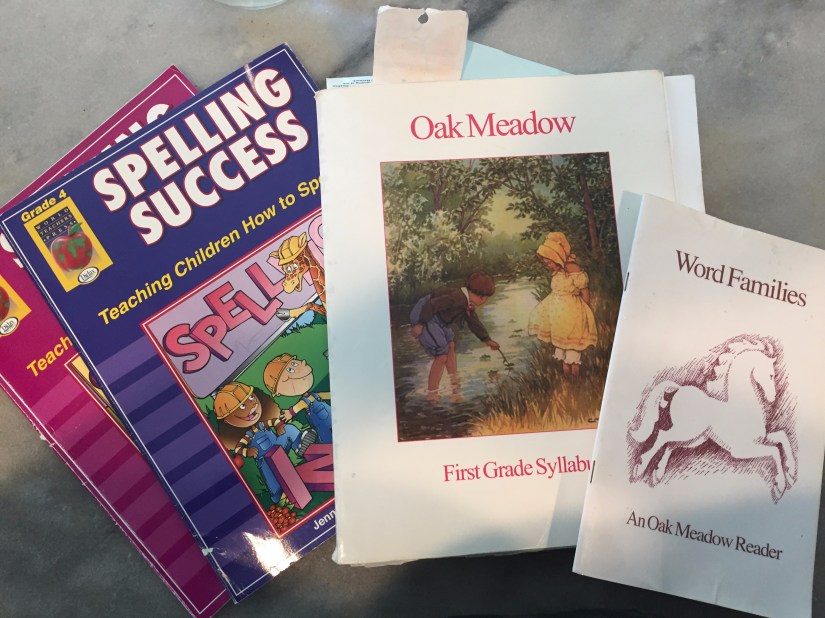
I have used Spelling Success Workbooks and Spectrum Spelling Workbooks as a supplement to the work we do in our BrainQuest Workbooks. These are great to have on hand to practice both spelling and math work a little deeper and to have some easy independent work on hand when needed.
I haven’t yet used a specific math curriculum with a teacher’s guide. I instead have always used Spectrum Math Workbooks for each grade level. I have found Spectrum Math workbooks simple and easy to follow. Each workbook has examples and clear explanations of the math topics being covered with answers in the back. It doesn’t have a teacher’s manual, but I have found that it works just fine for me with elementary math – thankfully I still remember how to do that! What I don’t remember, I just google it to find explanations or youtube videos that can help explain it to the kids and myself if needed. I have decided to continue using it for my oldest’s first year of middle school this year, but as we progress, I may need to seek out a program or material that includes a teacher’s manual or is independently taught to her as the math may get more complicated.
I have also used Oak Meadow’s 1st Grade Curriculum which I purchased used on eBay one year. The program is loosely based on the Waldorf schooling style and has a nice integration of art, science, nature and storytelling.
Five in a Row is another great, inexpensive curriculum you can use in an integrative way with different age levels at the same time. The books and lessons are geared towards children ages 2-12 years of age. Five in a Row is an easy-to-follow, instructional guide for teaching Social Studies, Language, Art, Applied Math and Science using children’s literature as the basis for each weekly unit study.
The greatest resource any homeschooler can use and it doesn’t cost a thing is your public library. This may be trickier during a pandemic, but there are still so many e-books available online to read along with audio books. Reading and encouraging a love for reading is the best education and gift you can give your child. So much of our homeschooling revolves around books the kids are reading and books we read together as a family. Anything the kids take interest in can be learned about from a book. We read a lot in our house. I usually have the kids read or read to them the books suggested for their grade level, but I also encourage them to find reading material and subjects that interest them. This year My oldest daughter has taken a keen interest in Oceanography and Environmental Sciences. We have explored many different books on these topics and turned them into great lessons on Geography, History, Science, Math and Art! That is the beauty of homeschooling. So much can be covered in such simple ways.
The social piece. Many people are turned off to the idea of homeschooling because they think it is isolating for children and that they only have their teacher as a parent and may not have many friends. When my husband first brought up his interest in wanting to homeschool our children, I was completely concerned about their socialization. I didn’t know much, if anything about homeschooling and it seemed like the type of thing a parent would do because they didn’t want to let go of their children or wanted to control them. The more I read about homeschooling, the more I discovered that the opposite was completely true. Homeschool kids were found to be more social, more outgoing and self-confident. Now, it’s not to say that school children don’t display these characteristics, because so much does come from how you’re raised, not just your schooling. But, what was being written about was how children who were homeschooled were in more situations that allowed them to take responsibility, to socialize with friends (most free time in school is limited and kids are very often being told what they should be doing at certain times by an adult). Homeschool kids are also learning in an integrated way that allows them to pick their friends not because they are the same age, but because they like each other and have things in common. One thing about integrated learning and not having my kids in school is that they never go into a situation saying, “you can’t be my friend because I’m older or younger than you.” Integrated learning takes away those barriers. My children have friends of all ages and learn from each other.
I also like for my children to have independent space to learn and grow from other people and situations. During a normal homeschool year my three older children are involved in numerous extracurricular activities like dance class, homeschool games class, pottery, art class, book clubs, drama clubs, sports and also attend a weekly homeschool science and environmental class at a nature center. You can make your homeschool experience look any way that you like with endless opportunities to learn and experience life in a hands on way. This is what I have grown to love about homeschooling, I see that my children love to learn. They love to be challenged, they like figuring things out for themselves and being independent, they don’t look at learning something new or different as a burden, but as something exciting.
Rainbow Resource Centerhttps://www.rainbowresource.com has a fantastic site full of everything you could ever dream of when homeschooling and more. It was created by a homeschool family and is a family run business. Their catalog and website have a great selection of resources with detailed descriptions along with great prices.
Additional Resources:
A laboratory for great hands on stem projects for all ages that arrives monthly in the mail – we always enjoy getting our Tinkercrate, Kiwi Crate, and Koala Crate https://www.kiwico.com/tinker
Reading Rainbow: Available on Amazon Prime and Youtube; Fantastic show incorporates books, reading and great topics to explore deeper supplement topics you have covered
Nurture Store https://nurturestore.co.uk Cathy Jaymes has a fantastic website for children pre-school age to 12 years old – great activities in all subjects
Give your Child the World Book: Raising Globally Minded Kids One Book at a Time by Jamie C. Martin. This book has reading recommendations for diverse books and topics for students of all ages. This book is a wonderful resource.
DK First Human Body Encyclopedia. Great resource for all ages when studying health and the human body.
The Everything Kids Science Experiments book by Tom Robinson
Know that whatever decisions you make for your children’s education, nothing is permanent. They can always go back to school or you can try a different homeschool design that might work better for your family. There is also no right way to homeschool there is no one way to learn!
The best experience is to nurture a love of learning, to open their eyes to the world, to instill self-confidence in your child and to create a joyful experience for you all!
“Tell me and I forget. Teach me and I remember. Involve me and I learn.”
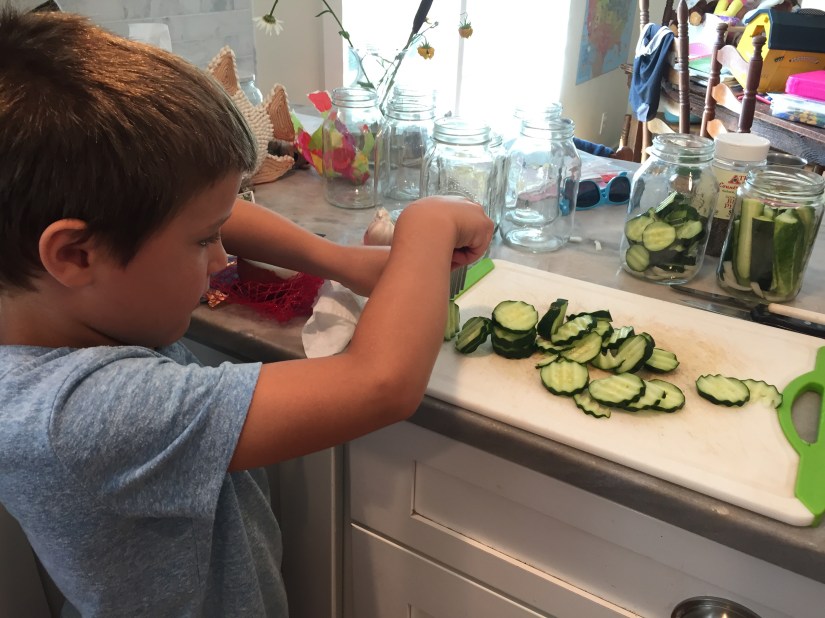
This pickling project was spearheaded by Leo. He loves pickles and was so excited by our surplus stock of cucumbers coming out of the garden that he requested we give pickle making a try. I’ve never made pickles before aside from what I call my lazy way of adding cucumbers to the pickle brine of empty pickle jars we bought from the store. It’s worked in the past, especially since we never really had a lot of cucumbers left over to jar. The ‘Homemade Refrigerator Pickle’ recipe we followed from A Spicy Perspectivehttps://www.aspicyperspective.com/best-homemade-refrigerator-pickles/ was easy, simple and the pickles taste great!
Homemade Refrigerator Pickles:
Ingredients:
3 to 4 cucumbers
1/4 cup Vidalia onion, sliced
3-5 sprigs fresh dill
1/2 cup apple cider vinegar
1/2 cup water
2 cloves garlic minced
1 1/2 teaspoons pickling salt or kosher salt
1/4 teaspoon granulated sugar
1/4 teaspoon whole black peppercorns
1/4 teaspoon whole yellow mustard seeds
Pinch crushed red pepper flakes
Fill a clean pint-sized jar with 3 to 4 sliced cucumbers, onion slices and fresh dill sprigs. Leave a 1/2 inch of space at the top of the jar for liquid.
In a small pot heat the vinegar, water, garlic and spices until the mixture comes to a simmer and the salt and sugar dissolve.
Cool the brine down to a warm temperature and fill the jars so that everything is covered with brine.
Close the lid tightly and refrigerate for 24 hours before eating.
Homemade pickles should last for two months in the refrigerator in a jar.
Enjoy!
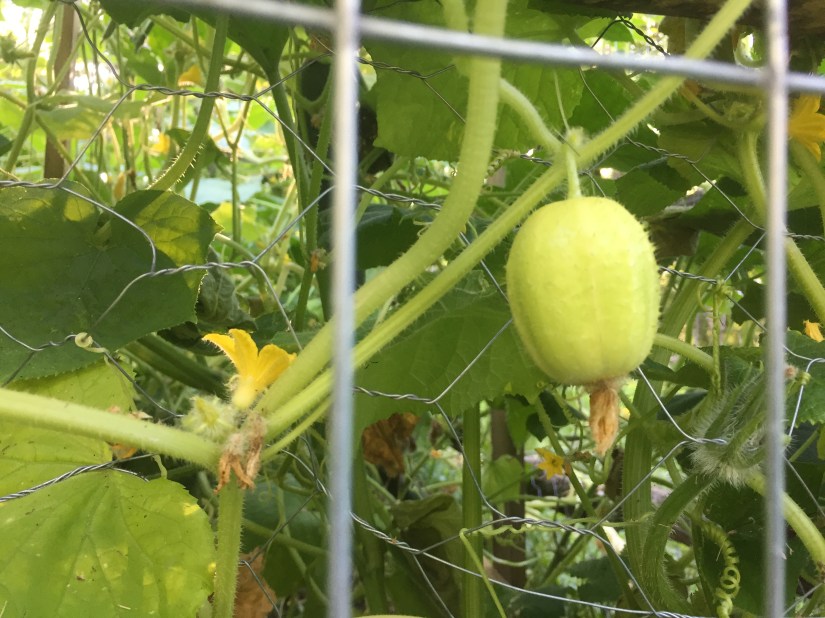
A Cucumber Lemon in the garden
I planted a different kind of cucumber in the garden this year along with the other pickling cucumbers. This one is an heirloom Cucumber Lemon. If you haven’t ever tried it, they are delicious. Crunchy, sweet and can be eaten right off the vine or pickled. Another great addition to the cucumber garden!
One beautiful gift in my family’s life that has come from this ‘great global pause’ is the time we took to expand our garden. It has been something Mike and I have been dreaming of doing for years and because of the need to remove trees, clear the land from lots of overgrowth, make beds, a fence and bring in some good compost – the task at hand was very labor intensive and time consuming. It was a team effort and we are thoroughly enjoying the fruits of our labor which I am grateful for each and every day.
With the warm July weather, the garden has truly exploded with bounty – and with that, we’ve had some unexpected visitors. One morning, Vivi (my 20-month-old) and I were sitting in the living room playing, when she pointed out the window and said, “Mama, Neigh, Neigh.” I looked and saw these adorable fawns in our yard eating some fresh buds off the stumps of trees we cut down. “But where is the mama?” I asked. “Oh, there she is mom,” said Leo. “She’s in the garden!” In the garden! I jumped to my feet and opened the screen door and there she was happily enjoying my beet greens! I started walking over to the garden as if to kindly ask her to leave and not frighten her babies and as peacefully as she came, she left, jumping over our garden fence. I discovered that the beet greens weren’t all that she likes, she throughly enjoyed our green beens too!
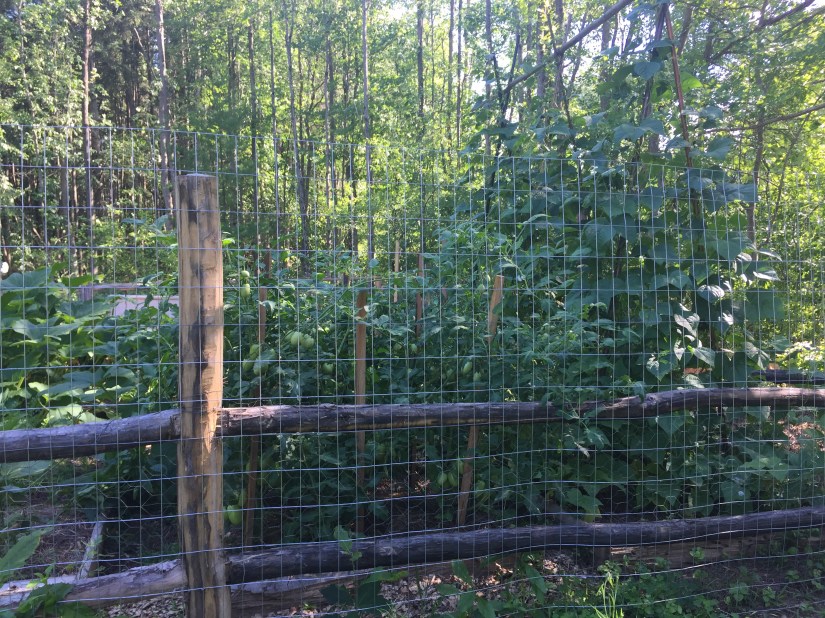
About a month ago, when Mike was working on the fence, he asked me if we should make it higher than 4 feet because deer can jump 6 feet high. I told him that the likely hood of a deer jumping over a fence to get into our garden seemed funny, entirely unlikely and not to worry. Well, rather than eating my beet greens, I’m now eating my own words! Since then, we added a wire addition to the fence so that it now stands at 6 feet tall. The deer keep visiting, but fortunately they haven’t attempted leaping this fence.
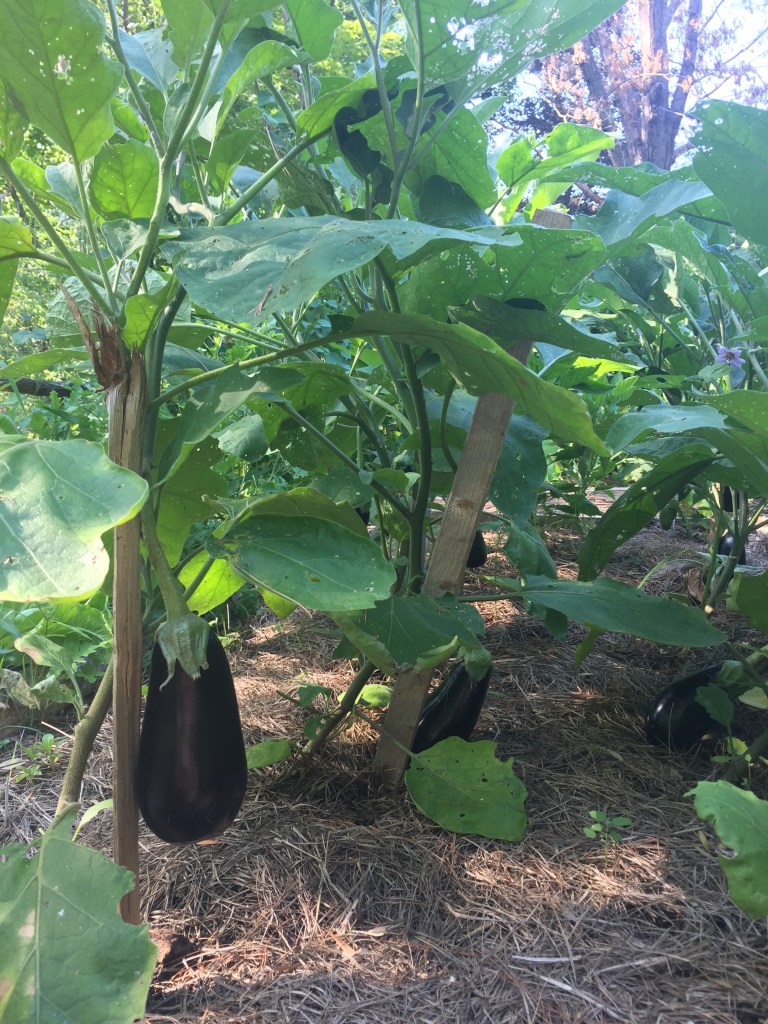
The garden fun doesn’t stop there. The kids are always so eager to pick the ripening vegetables, even before they’re ready and bring them into the house to show me with excitement. We have eaten some small, hard, orange tomatoes, very small and bitter cucumbers and some baby eggplant. No problem, it’s all edible, some vegetables really just taste a heck of a lot better when they are ripe! It has been a good lesson in patience. Fortunately, the kids have now pretty much got the hang of picking fruit when it’s reached its peak, aside from Vivi who still loves those big green tomatoes she calls apples! We check the garden daily scoping out with excited anticipation what we can pick next. Unfortunately, we had another little visitor that was also watching our tomatoes, eggplants and carrots as closely as we were and decided to taste test the fruit too! Instead of eating it all or taking it with him, he just took bites of whatever he liked and left the rest there for us. So, again, we were back to the fence, searching for a spot that the little bugger was using to get into the garden. We found the hole and found another, made some repairs and found out the hard way one night that it was a skunk who was paying our garden a nightly visit.
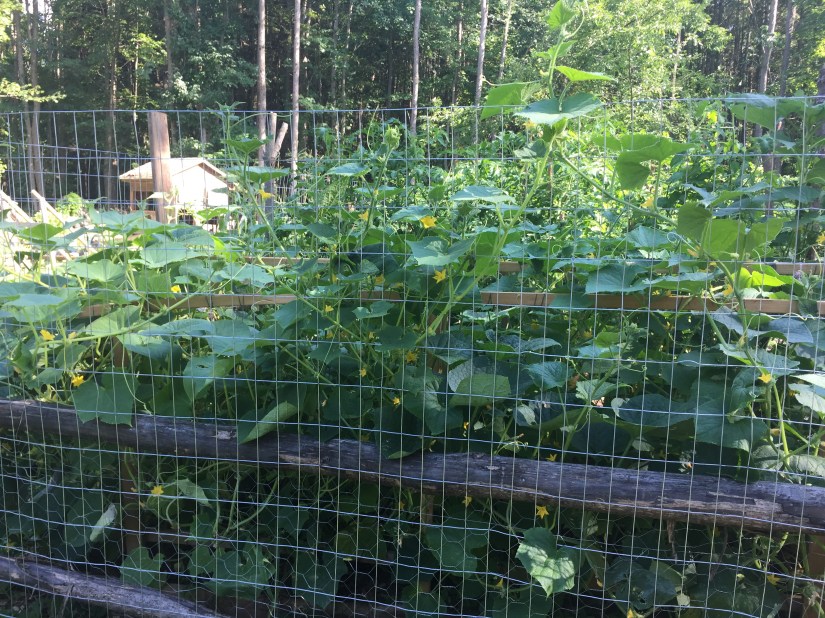
Now that we have put the garden on lockdown from all visitors except for those that work in it, we have seen things start to flourish again and are having a hard time keeping up with all the goodness. We have been enjoying summer squash, zucchini, cherry tomatoes, early girl tomatoes, green beans, eggplant, cucumbers, cucumbers and more cucumbers! The kids and I have been trying out many zucchini/squash recipes and have been enjoying zucchini fritters, saute’d zucchini, squash and eggplant, and some great zucchini bread along with many cucumber and tomato sandwiches. Leo and I also made homemade refrigerator pickles and as we were packing them into our refrigerator, we realized it was broken! Yes, all my pandemic frozen goodies went with it! Didn’t realize they had all thawed and could only save so much since my oven broke earlier in the week and I was only working with a stove top! Just feel like it was all adding to the slower, homesteading pace of life to be without my appliances! Had to try and go with it, otherwise I may have broke down too! Fortunately, we had a back-up fridge in the basement and were able to save what we had in the refrigerator – especially those pickles!
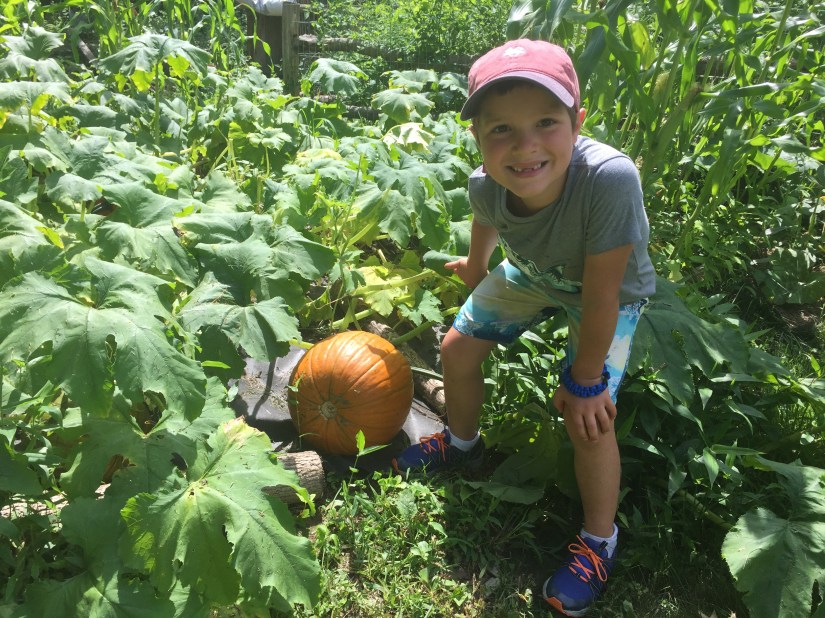
Yes, Believe your eyes, it is an Orange Pumpkin in July in New England!
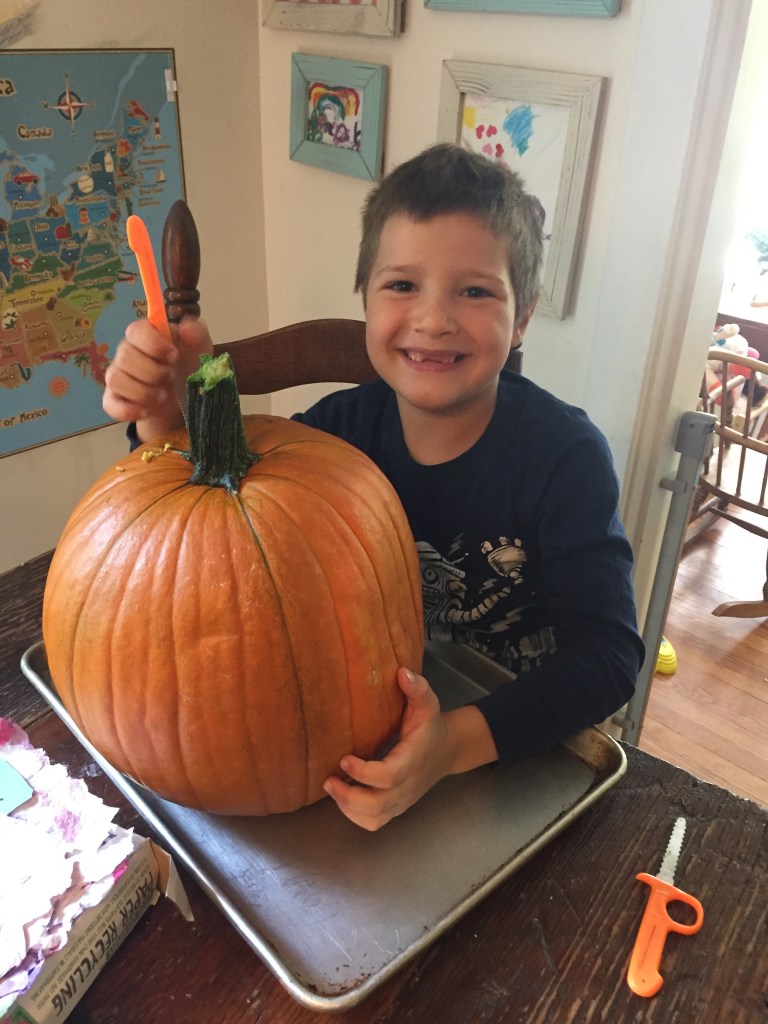
Leo has decided to celebrate Halloween in July and has been having lot’s of fun carving summer squash, cucumbers and even one of his pumpkins from the ‘Great Pumpkin Patch!’ Can’t help but smile looking at my little guy and his missing two front teeth next to his toothless pumpkin!
I hope you all are enjoying the joys of gardening and celebrating the beauty and bounty of life. The gifts of life are so precious – meant to nourish, to be preserved and above all, Enjoyed – True to the garden. True to life!
Wishing you all Good Health, Good Food and Good Company.
Life is Good!
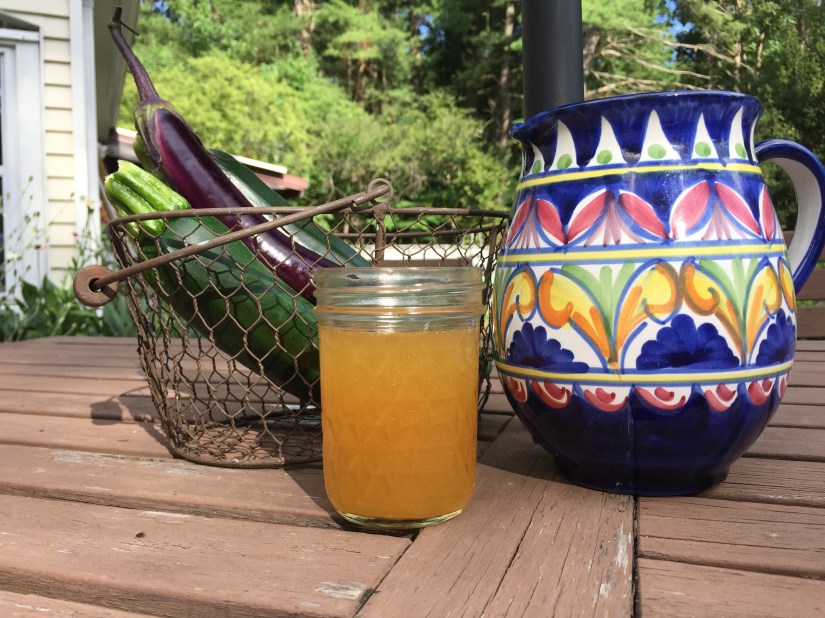
Switchel, it’s easier to make than it is to pronounce! Although, my kids really get a kick out of saying it, especially Leo now that he’s missing his two front teeth! First time I ever had this old-fashioned energy concoction was years ago on my father-in-law’s farm. After a long day working in his garden, he had mixed up his own switchel and offered me a taste. It definitely packs a punch, but as I’ve learned through experimentation, there are so many ways to mix it up so that it’s pleasurable to most tastebuds.
Switchel is an 18th century energy drink that restores the bodies electrolytes while also boosting the immune system. It is easy to make and allows for some creativity. Your standard Switchel is a 1/2 gallon water, 1/4 cup apple cider vinegar, 1/2 cup molasses (not black strap), maple syrup or honey and a tablespoon ground ginger or minced ginger (first steep minced ginger in water and then add just the liquid to the drink filtering out the ginger pieces). This really is a much healthier version of the energy drinks you buy today and cheaper to make! It is an excellent summertime drink that helps rehydrate your body and build your immunity for the fall cold season to come. In the cooler weather I like to add 1 tablespoon Apple Cider Vinegar, 1 teaspoon honey and a pinch of ginger to a favorite hot herbal tea like green tea or echinacea.
Even Vivienne at 20 months enjoys a little Switchel!
We have played around with our Switchel concoction at our house and have come up with some great recipes!
Our Favorite Switchel Recipe:
Ingredients:
1/2 Gallon Seltzer Water or Sparkling Water (You could even use a favorite flavored sparkling water)
1 Tablespoon local raw honey and 1 Tablespoon Molases – heated in a little water so they dissolve before adding to the drink
1 Pinch Sea Salt or Hawaiian Pink Salt
1/4 Cup Organic Apple Cider Vinegar
1/2 Cup lemonade, orange juice or cranberry juice
1 Tablespoon fresh ginger, minced and steamed in some water (only add the flavored water – filter out the ginger pieces)
4 drops Elderberry Syrup
1 Teaspoon Egyptian Black Seed Oil (This is excellent in building your immune system, calming inflammation and aiding in healthy gut flora and digestion – you may want to leave this out initially for the kids because it has a very strong taste).
This is the Elderberry Syrup and Egyptian Black Seed Oil that we use
Mix it all together and Enjoy!
Here’s a Great Educational video from the Townsends on making Switchel!
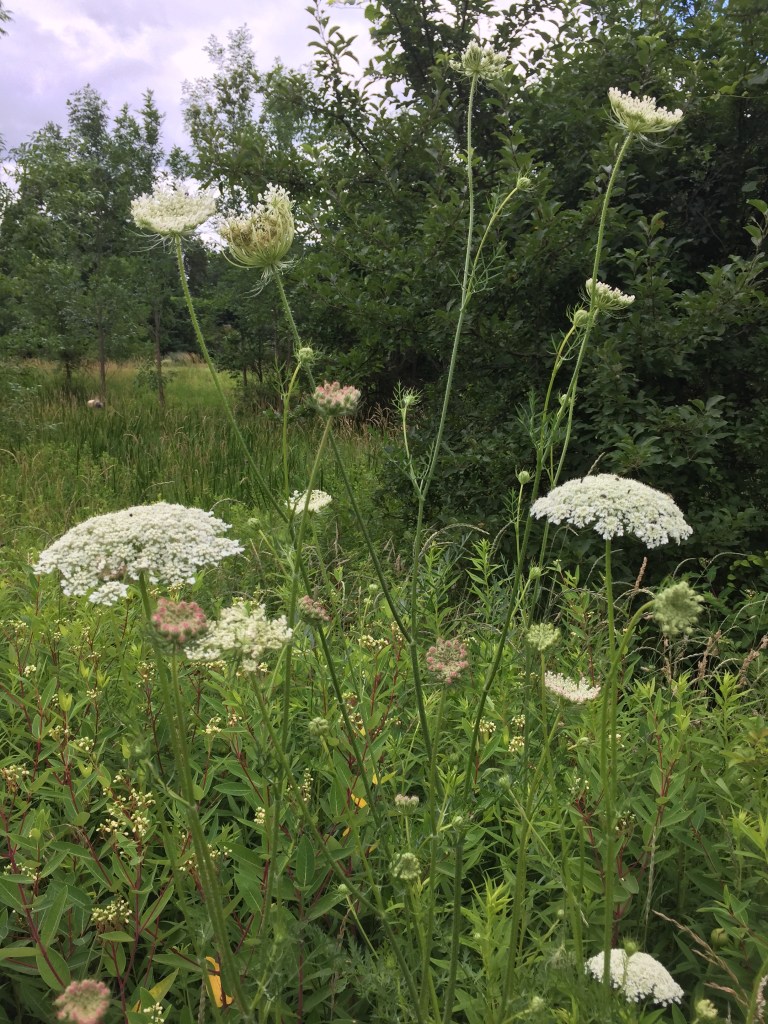
Strolling down my road on long walks as a young girl I would love to collect Queen Anne’s Lace. It is a very common white, flat-topped flower that resembles lace and often has a solitary purple flower in the center. It is found in fields, meadows and along roadsides from late spring until mid-fall. Its name is derived from a legend that tells of Queen Anne of England pricking her finger and a drop of blood landing on white lace she was sewing. Queen Anne’s Lace is also known as “Wild Carrot” and its roots are edible. Early Europeans cultivated it using the root in soups, stews, salads and teas! As for me, in my youth, I never dreamed of using the flower this way! I had other magical ways of turning this common weed into a wonder!
For me, Queen Anne’s Lace was magical. I would look forward to collecting these beautifully elegant flowers to bring home and transform into a colorful display. My favorite thing about these flowers was to put them in jars of food coloring and watch the colors magically change before my eyes! It was amazing! It sparked so much curiosity. Little did I know the science that was involved. This flower experiment was something my mom started with us as kids and is a tradition that captivates my own children today.
Leo’s colorful Blue firework!
We found this rare beauty in nature. A Queen Anne’s Lace flower that is naturally reddish pink in color!
Coloring Queen Anne’s Lace is a fantastic and simple lesson for children in capillary action. All you need are some flowers, some small jars or vases, food coloring and a little time and patience. Add a handful of drops of food coloring and a flower to each jar of water. Depending on how much water and food coloring you add, you will most likely start to see your flower change color over the course of the day. How does the water travel from the roots to the rest of the plant? Tiny tubes inside the stem called xylem draw the water up from the roots like a straw by a process called capillary action.
Leo and I cut the stem in half so we could try and see the xylem tubes
Capillary action is what happens when water travels up things like small tubes. The water molecules stick to one another and to the walls of the tube which allows it to move upward. The molecules that stick to each other pull more water after it as it climbs. Capillary action lets water travel up to all the different parts of a plant through the xylem tubes in the stem.
You could also try this experiment with stalks of celery. Place a stalk of celery into a jar of food coloring and water. After about 20 minutes you can cult the stalk in half and see the tubes changing color. If you leave the stalks overnight you will also see the leaves at the top of the stalk change color.
Wishing you some Beautiful summer strolls in nature that bring you Wonder and Amazement!
It’s like striking gold! One day in the yard Leo and Lily were digging and discovered clay – lot’s of it! We did a little research and found out our little New England town was once known for making bricks a long time ago. So, it’s no surprise that clay is naturally plentiful. It has been a wonderful discovery and the kids continue to take full advantage of it! They usually fill a gallon bucket and get to work making some unique and beautiful creations. For Mother’s Day, Leo made me about 10 pinch pots! Yes, 10, because we all know, you can never have enough pinch pots!
The kids sometimes mix the clay with sand or straw to give it more strength. There are so many fun things you can make with clay. Leo made his own bricks and we cooked them on high heat over the grill. They now surround his corn bed out in the garden.
Lily has also used the clay on her potter’s wheel and made some bowls. We usually let the clay air dry. It isn’t water safe and some pieces are more delicate than others, but surprisingly once hardened, the clay is quite durable.
Once dry, you can try painting your nature clay, but it is pretty dark and grainy, so the paint doesn’t always show up that great. We have found that if you mix a powdered tempura paint into the clay – it can hold the color nice.
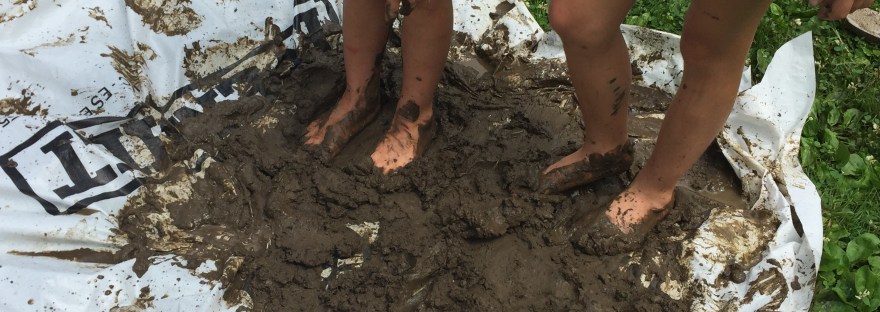
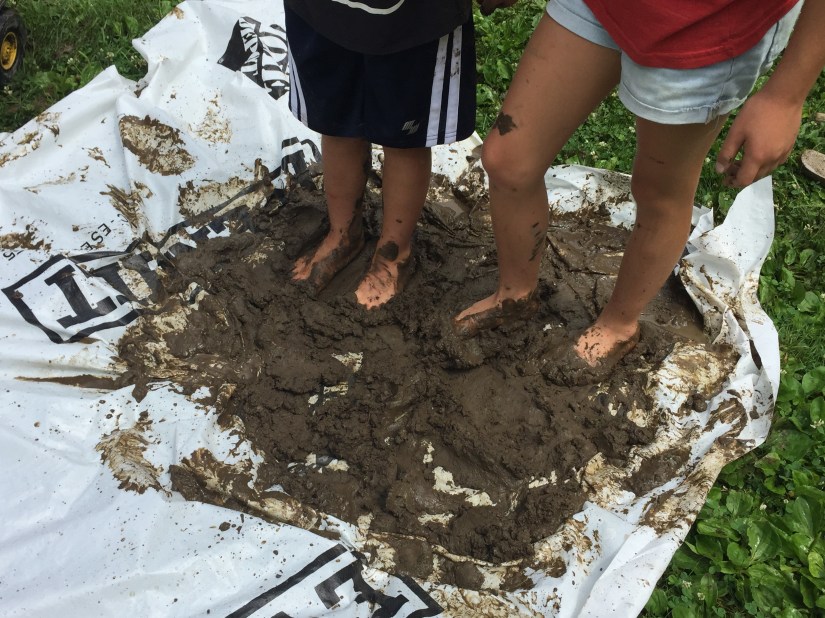
Recently the kids were inspired by a video we watched about making your own primitive outdoor clay oven and went outside to give it a try! First they collected their clay. Then mixed it with some sand and hay and then stomped all over it mixing it with their feet! It reminded me of the I Love Lucy episode when she stomps on the grapes in Italy! Some good old-fashioned messy fun!
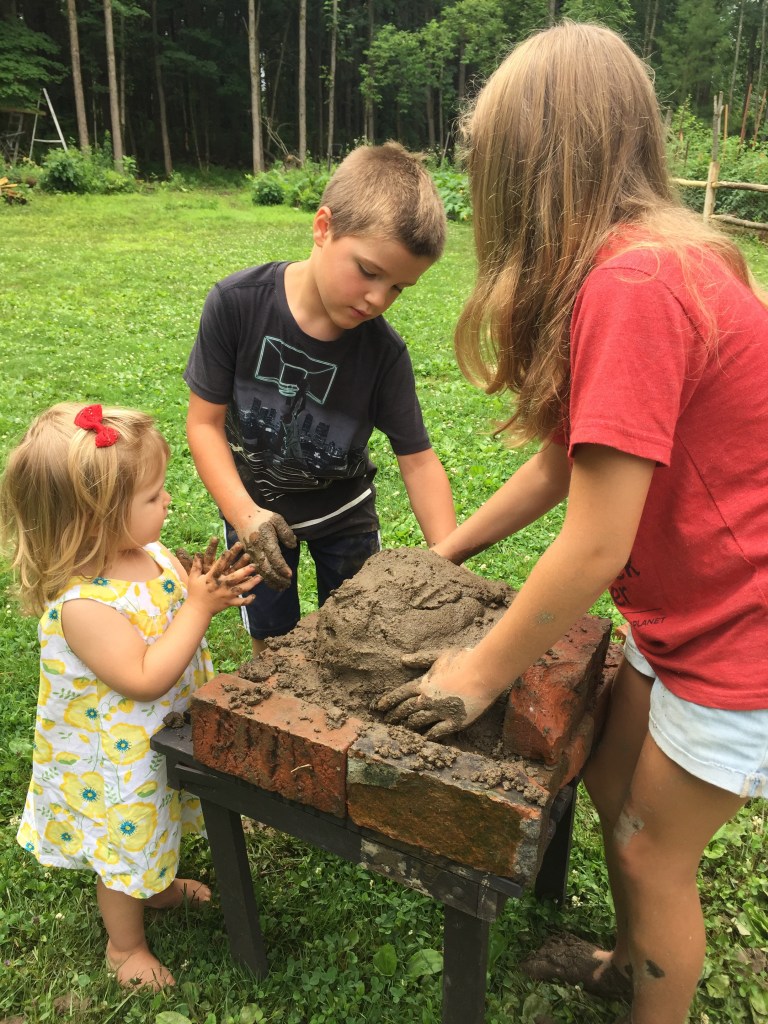
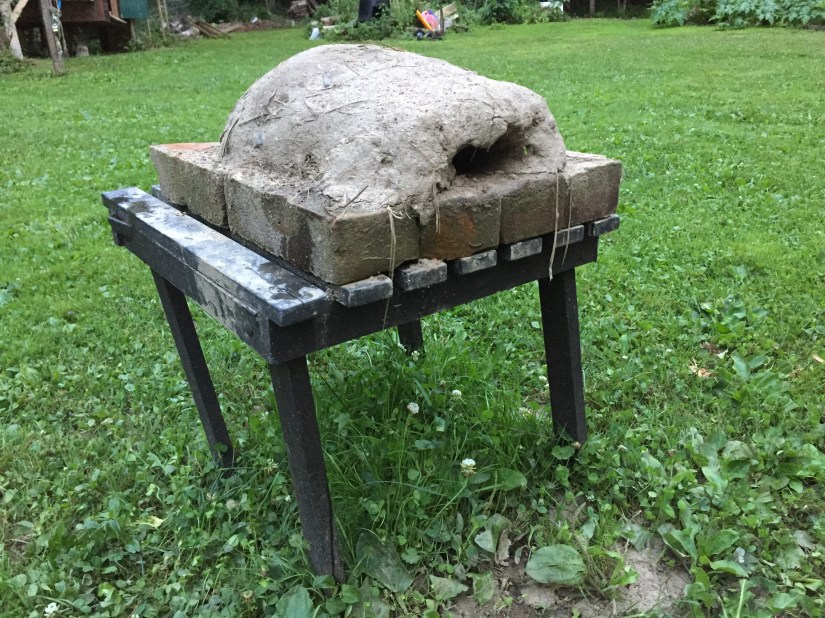
Next the kids gathered an old table and some bricks to form a base for their oven. They decided this would be a mini version of the real thing to test out the process. Then they piled on the sand to form an oven shape and covered it with wet strips of newspaper. After that dried, they piled on the clay. The final product – a little small to bake a loaf of bread, but Leo said we could at least toast a slice of bread in it!
I you’re interested in making your own outdoor clay oven, this youtube video from the Townsend family is great https://www.youtube.com/watch?v=i0foHjPVbP4 . The Townsends family site is also fantastic if you are interested in exploring anything from the 18th and early 19th century with your kids or for your own personal interest. Here’s a link to their site https://www.townsends.us. My kids love watching these informational videos and it has inspired us to make many new creations from the early settlers. Especially appropriate in our slower pace, down time at home!
If you’d like to try digging up some of your own clay from the earth, searching near the banks of local creeks is one place that often has lots of clay. You could also research local clay in your area online. We also love working with store bought air dry clay.
If your kids are really young, you may find play-dough a better medium to sink their hands into. Although, my one year old very much enjoyed covering herself in clay and helping pat it down onto the clay oven- we just had to keep her from removing the clay and taking the oven apart!
This is a favorite and full proof play-dough recipe we have made over the years and like it the best because it’s easy to make and lasts long.
Homemade Playdough:
Ingredients:
1 Cup Flour
1/2 Cup Salt
1 Cup Water
1 Tablespoon Vegetable Oil
2 Teaspoons Cream of Tarter
Mix all ingredients together in a medium size pan. Cook over low heat on stove top, mixing with a wooden spoon the entire time, until a ball forms. If you’d like to add food coloring, do this once play-dough has cooled a bit and mix into dough with your hands. Store the play-dough in and airtight container for a month. If it starts to get sticky, put it back in a pan on low heat to dry it out a little more.
Have Fun!
*Since having kids, my motto has not only become “Embrace the Pace,” But Also – “Embrace the Mess!” It keeps them busy, it’s therapeutic and it makes for great memories!
Let America be the dream the dreamers dreamed- Let it be that great strong land of love / Where never kings connive nor tyrants scheme / That any man be crushed by one above. – Langston Hughes
On this anniversary of our great Nations’ Independence we wish you all freedom and happiness. Thankful for the life, liberty and path to all that we hold dear. Take the day as yours and reflect on the joys that make life worth living. Let’s all pledge to pursue them together for a better tomorrow. Peace, Love and Joy be yours today and always.
Eat pops, Play games, blow bubbles, splash in the sprinkler, have a bar-b-cue, roast marshmallows – Have some good old-fashioned fun and spread the LOVE!
And if you’re looking for a little pleasure reading to share with the kids – this is a great look into the history of the document that gave the people of the United States their freedom
From our Home to Yours – Have a Wonderful Weekend!
“The glory of gardening: hands in the dirt, head in the sun, heart with nature. To nurture a garden is to feed not just the body, but the soul.” — Alfred Austin
The garden keeps on growing! Each day we walk through the garden weeding, watering, and pruning the suckers off the tomatoes, we are amazed by the growth that seems to happen overnight. Gardening is truly a labor of love. If you’ve ever weeded a carrot bed, I’m sure you’d very much agree! Weeding aside, tending to a garden is therapeutic for me and I think it’s contagious! The kids along with Mike are always out there checking on their plants, pulling weeds, picking bugs off the bok choy and the eggplant, making sure the ground isn’t too dry, counting tomatoes and flowers in the pumpkin patch and dreaming of what the next couple months will bring like tomato sandwiches and homemade pickles!
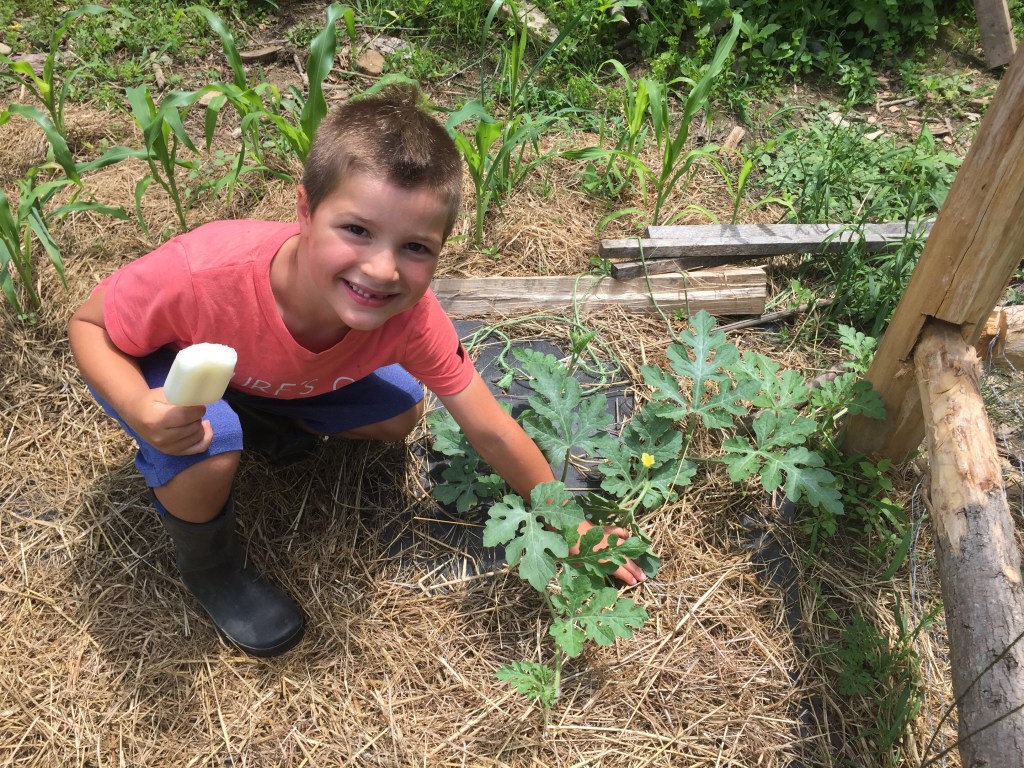
Tomatoes, Zucchini, Squash and the Cucumbers!Leo and his watermelon plant. He’s very excited that it has a flower!
Leo has been my right hand man in the garden this year. He seems to be pretty much in charge of the whole production, but like any good boss, he is always asking questions and learning himself! He is always out there first thing in the morning to check on things, especially his two bean plants that he sprouted from seeds in a jar and then transplanted into the garden. He is a seed saver. Everything he eats, he usually asks where is the seed and how did this grow on a plant and can he grow it in the garden. We are both learning something new everyday. We have researched corn, how many ears one stalk can grow, how to help your pumpkins grow bigger, where are banana seeds and why flowers turn into plants. We also have been studying bees; how they survive and thrive and how they pollinate plants.
People who love to eat are always the best people.
Julia Child
Spending time in the garden has always brought me great joy and I feel so honored to be able to share this gift with my family. I have so many beautiful childhood memories of my Italian grandparents garden in New Jersey. My Nonno and Nonna taught me so much about working the earth and making good food. They were the original “organic” farmers growing up in a little mountain village in Italy. They valued everything they put on the table because it truly was in every word, “the fruits of their labor.” So much of what I know about gardening I learned watching and helping them. They taught me at an early age to respect the earth and to take care of it because our existence depends on it. They weren’t environmental activists, they were Italian farmers who knew the importance of respecting the earth that feeds you. They taught me where food comes from, how to compost and create healthy dirt, how to save seeds for next year, how to can and cook what you grow and best of all, they taught me the great joy of sitting down to a meal together with those you love.
Gardening and food have a way of connecting us all
Planting a garden isn’t just about experimentation, it is about hope. It is about believing in the magic and beauty of the earth and the gift of tomorrow. When planting a garden there are so many things that are out of our control that can effect our plants. To believe in a garden is to have hope. Hope that the tiny little seed you planted will be nourished by the earth and weather the storms and be resilient. It is having trust in the unknown, which is something I hold very near to my heart during these uncertain times. Hope is something that like a garden needs to be nurtured and encouraged to grow. There is no time better than the present to harvest hope. To believe in tomorrow. So I encourage you to dig deep into the earth and plant some seeds of hope. Your garden will do more than grow plants, it will give you a harvest of plenty; one that will nourish the mind, body and soul.
Having a garden and believing in new beginnings is a Victory for us all!
































 Be The Route